01 December 2015

SeoulMate Style - online Korean fashion mall recommendation

Long time since my last post on this blog. Will try to write more often from now on.


As over the years Korea is getting more popular overseas thanks to dramas, K-pop, and Korean electronics, there are more foreigners interested in Korean pop culture, and of course, Korean fashion.


For those looking for Korean fashion and culture, I would like to recommend SeoulMate Style, one of the most original online fashion stores I've ever seen.


SeoulMate Style - Korean fashion from Seoul


SeoulMate Style, or briefly SMS, aims to combine fashion and culture, and instead of simply displaying apparel as other online stores do, SMS displays its products in the context of Seoul's most famous shopping areas, and their specific style.


Besides all this, SeoulMate Style has special categories dedicated for jewelries and other fashion items from K-pop and K-dramas! I guess these must be really popular with Korean pop culture enthusiasts.


Check out SeoulMate Style now, and enjoy Korean fashion!


05 January 2012

download my brother's new album !!


My brother, Armin, finished his second electro-noise album, entitled "Universal Album." You can download it for free at this link

03 December 2011

interesting article and photo contest

Lotte Giants fans in Seoul, Mokdong Baseball Stadium
Looking through the net a few days ago, I found myself mentioned in an article on the blog of the official website of S. Korea (www.korea.net).
Last summer I won a prize for a photo essay about Busan, and I was also included in an article about the competition.
You can find the entire article at this link.
You can find some  of the photos that I submitted for the competition at this link.

I copied the passage that is about me, you can read it here:

"Fabian Emanuel from Romania has become a true “Busan Sanai” (사나이, a man’s man) who worships the baseball team Lotte Giants with almost religious fervor. He took a photo of cheering at the baseball stadium and commented, “Eventually, if you want to understand the people of Busan, all you have to do is visit the stadium at least once to see the Lotte Giants. In the end, I have become an avid Lotte Giants fan as well.”

27 November 2011

and time goes on (seoul at night)

After a quite long time back to my blog. So many things happened during the last few months, I don’t even know what to start with…
Seoul at Night - Gwanghwamun gate. The newly renovated main gate of Gyeongbokgung Palace.

10:37 PM, I am in the metro, rushing through Seoul and I just realized that I already spent more than two years in S. Korea. Actually, I spent more time living here than in Cluj-Napoca, and for now I call this place my “home.”
Seoul at Night - February 2011, freezing cold at 6 AM. Seoul, the dynamic city full of life, one of the most crowded cities in the world, has its moments of silence. Although one must know were to go to find silence in this metropolis, an early walk over the bridges of the Han River provides a meditative, fresh winter morning.

The songs keep on shuffling on my player and European songs keep on alternating with Korean ones. Living and enjoying my time in Korea definitely changed my preferences, and the time I spent here so far had a benefic impact on my personality. Learning Korean language was one of the biggest challenges of my life, but it was also one of the best experiences so far. After graduating in August from Yonsei University’s Korean Language Institute I can say that for me, learning a new language also meant learning a new culture.
Seoul at Night - Myong Dong, as empty as it can get. Walking in a straight line through Myeong Dong shopping district is impossible in the afternoon and evenings, due to the hundreds of thousands of happy shoppers. However, a walk at 2 AM unveils a totally weird, empty face of the neighborhood.  

A graduation ceremony should always be followed by a new enrolment ceremony, and every end is nothing else than a new beginning. Like my grandmother always says, humans learn during their entire lifetime, but still end up dying foolish. I continue to aim higher and since last September I am pursuing a master’s degree in Korean cultural studies at Yonsei University in Seoul. So far, I have mixed impressions, but I assume that the intense program and busy schedule are good indicators showing that Yonsei deserves its reputation as one of Korea’s top universities.
Seoul at Night - Seoul North Tower (Namsan), 2009 and 2011 photos

I don’t have time to go into deep insights, because I will have to get of the metro at the next station, crushed between thousands of people. I will walk among the other passengers, a tall European wrapped up in Korean fashion items, thinking about novels, art, researches or simply just what to do next. Sometimes, totally engaged in the busy life flow of the metropolis I wonder about where I come from, and where I am heading to. During the last half a year, I didn’t really produce any piece of art, and I don’t regret it, since I am not an artwork factory that should create a certain units per month to keep up with the social tag of an “artist.” I have my excuses. I can say that I’ve been busy. But I must admit that I didn’t really feel like doing any art. Although sometimes I think about it, I am just not in the mood for it. Also, if I don’t have the possibilities to realize my projects as I desire, I will not compromise them. Sooner or later, I will start something new. It is just a question of time.
Seoul at Night - Sukdae area

I check my transportation card and I leave the metro station. Rushing up on the escalator. Outside the weather is colder than I expected. This cold reminds me of the atmosphere of the first novel I wrote, about 6 years ago. Since then so many things changed. This year I decided to commit myself more to literature, and I hope that I will have the time and mood to transform my sketches into novels. Sometimes, I feel selfish, and I don’t want to write about the world that I created inside my head, to not share it with anyone. Sometimes, I feel that my writing is too sincere, and it uncovers certain details about myself that I prefer to keep hidden. Sometimes, I am worried about the social consequences that my writings might have. However, probably soon enough I will pick up the challenge and continue writing.

I am waiting for the elevator. It came, finally. Press the button for the seventh floor. Going up.
I hope I will have more things to say soon.

18 May 2011

Valentine's Day


Last week finally I managed to finish my new short novel, called Valentine's Day.
For now, it's about 50 pages long and it's written in Romanian.
Probably I will post some fragments from the novel after about one month, I still need some time to review it and make some necessary corrections.
Later I hope I will manage to make some English translated versions of what I'm writing recently, but probably I will need some help from a native English speaker.
~
As my recent writings try to exploit subjects related to Korean contemporary culture, the novel focuses once again on my female character Lee Seona, also the central figure of my previous work "Circles. Tiny Circles" [Cercuri. Cerculete - 2009].
The story tends to be a detailed approach toward the feminine psychology, while it explores the Korean celebrity culture and it's depressing impact upon the celebrity's daily life.
~
Briefly speaking, the novel unveils one day from Seona's daily life, and throughout a series of flashbacks it analyzes her dark intimate backgrounds.
 ~
Like her fake smile during her fashion photo shooting sessions is in contradiction with her distress, the context of Valentine's Day becomes a paradox while she is facing the huge risks of a public scandal based on her scandalous private life.

More info soon !

08 May 2011

The Stick of Love

Having fun with my piggy character. Just a sketch that I colored yesterday.

30 March 2011

Website of artist Radu Ciobanu

Yesterday I made un update for the website of artist Radu Ciobanu.
I uploaded a set of images of his new sculptures, and I made some small changes on the structure of  the site.
Check out his website here !

22 February 2011

New Artworks

See more artworks on my website at the following link !


07 February 2011

Follow me !

Advertisement for Shanghai Metro [my favorite ad design from China]


From now on, you can also follow me on Facebook. Just search for my name :)

Also, Korean users of Cyworld can follow my Cyworld account at the following link.
내 싸이월드  미니홈피 링크.^^

In Qingdao, China

26 December 2010

Dream - Landscape

Here is a painting that I finished yesterday, on Christmas.

I dreamed the landscape a few months ago, and I can say that so far it was probably the most colorful dream that I ever had.

I tried hard to remember it, and finally yesterday I made a painting after it to not forget the feeling that I had during my dream.

16 December 2010

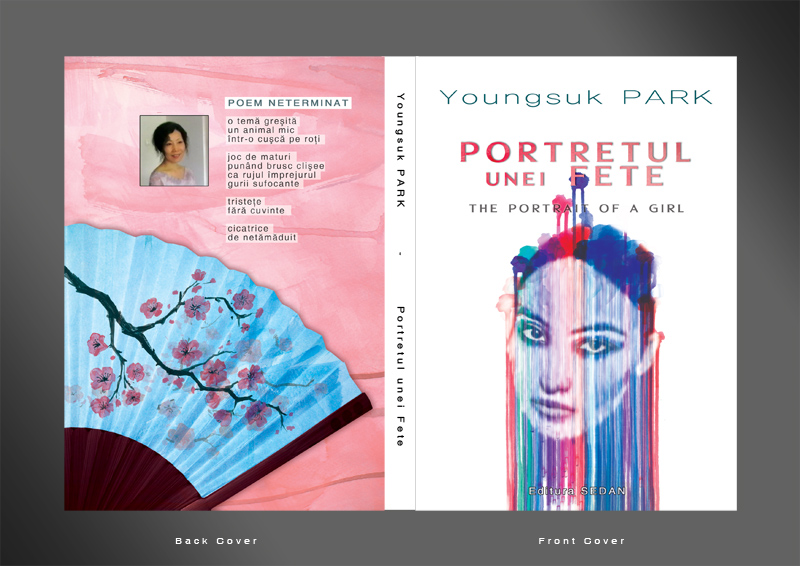
Cover Design

Cover design for the newly published collection of poems by prof. Park Youngsuk
 

09 December 2010

Gwangju and the Gwangju Biennale 2010

When I hear the word Gwangju, usually I think about two major events: the Gwangju massacre from the 80’s and the Gwangju Biennale.

Before South Korea experienced its contemporary democratic regime after the 1990’s, the country was kept for decades under military dictatorship. Out of the numerous anti-dictatorial movements that pursued the achievement of a democratic regime, the Gwangju Democratic Movement is considered to be the main effort toward democratization. It marked the contemporary history of the nation, and left a scar in the background of Gwangju City. The Gwangju Democratic Movement was the climax of tumultuous events that marked South Korea after the assassination of controversial President Park Chung-hee. The uprising in the city of Gwangju in May 1980 against Dictator Chun Doo-hwan ended with the intervention of the South Korean army, and with the death of hundreds of civilians.

Park around the Gwangju Biennale expo halls

 The second event that pops up about Gwangju is the notorious Gwangju Biennale, Korea’s most important international art event, and probably Asia’s most relevant biennale. Held every two years since 1995 [with a 3 years gap between 1997-2000] the event takes place at about 300 km south of Korean capital city Seoul, in Gwangju city. It also alternates with the more recent Gwangju Design Biennale that is held during the odd years. The Gwangju Biennale is an event that although is being held in a provincial city, it brings tens of thousands of tourist from all over the country, and also numerous international visitors. This year it gathered more than 100 000 visitors in the first three weeks from its opening.

This year’s event, the 8th Gwangju Biennale, was held between the 3rd of September and the 7th of November, and it took place in the same year with the 30th anniversary of the Gwangju massacre. This edition of the expo was entitled “10 000 Lives” [만인보 - Maninbo] a title inspired by Korean writer Ko Un’s novel with the same title. His main composition, “10 000 Lives” represents a collection of epic poems consisting of 30 volumes, written during his imprisonment for participating in the Gwangju Democratic Movement. The poems are built up as portraits of all the people that the author Ko Un met during his life. Today Ko Un, one of the most respected Korean writers is considered to have real chances for receiving the Nobel Prize for Literature, and although his opera is extremely wide, “10 000 Lives” remains his main creation.  .

The artistic director of this year’s event was Massimiliano Gioni, an Italian curator who although is still young, already gained valuable experience by participating in numerous world-class events. While so far the most relevant event that he participated in as a curator remains the Venice Biennale 2003, his curatorial backgrounds reach far beyond the boundaries of Europe. Starting from the theme “10 000 Lives,” he came up with a coherent curatorial project, encompassing the works of about 134 artists from various countries, bringing together over 9 000 artworks made between 1901 and 2010.

As the title “10 000 Lives” already suggests, the curatorial project is centered on the relation of people with images, and vice versa - images with people. The artworks selected for the exhibition are generally representing human life and it seems like portraiture was favored due to its direct connection with this year’s temporary exhibition’s theme. The Italian curator avoided to bring into scene the last editions’ fancy installations and futuristic artworks, favoring the traditional media, more suitable for the expo’s theme. He managed to bring together a stunning amount of images and expressed his curatorial vision clearly while creating a harmonious exhibition with a well exploited concept.

Once the visitor enters the exhibition space, he is exposed to thousands of images mostly featuring portraiture under various forms and themes: images of idols, imaginary figures, anonymous faces, dolls, puppets, masks, posters, ads etc. The selection encompasses various techniques from traditional painting and sculpture to the innovative new media installations, ready-mades and performances; however dominant are photography and video - probably the best suitable for the theme of the expo due to mélange of artistic and documentary qualities.

"Visible World" by artists Peter Fischli and David Weiss

 The repetition of thousands and thousands of photos, and numerous videos creates somewhat a monotony that makes many of the visitors to skip most of the videos that require tens of minutes of viewing time. It also pushes on many spectators to just walk by the exhibited rows of photos passively, focusing on few images out of hundreds exhibited as groups. However, memorable were the 3000 small photos laid on light tables entitled `Visible World’’ by Peter Fischli and David Weiss depicting people, objects and especially urban and natural landscapes from all over the world. 

Furthermore, another artistic project that managed to exploit well the qualities of photography and interact efficiently with the public was the project of Franco Vaccari. His project got built up during the event by asking visitors to take free passport sized photos in photo cabins placed inside the expo hall. The images were posted on the walls covering the exhibition space and leaving a trace of the public’s visit at the biennale.

project of Franco Vaccari

However, instead of being held up for long time in front of the groups of hundreds of images, the viewers seemed to be much more interested about the far more captivating new media artworks, installations and ready-mades, although their number was relatively low. No wonder, taking in account that the Korean public seems to be accustomed with numerous media and digital art festival/expos. These events comprise artworks that involve the viewer not just visually but also sentimentally by interacting with all the five senses, leaving often stronger impressions on the long term. Talking about artworks that imply the public emotionally, I believe the 2010 Gwangju Biennale’s most impressive art project was a combination of performance and media installation made by Croatian artist Sanja Ivekovic. The artwork integrated itself perfectly into the theme of the expo, and also gained a special value for making a direct link to Gwangju’s history. A number of screens lined up by the walls of the exhibition hall were showing slideshows of photos of people who died during the Gwangju Massacre. The people appearing in the images were all represented with closed eyes, after the images were digitally modified. In front of these screens, through a performance offered day by day, the Gwangju movement’s hymn was hummed by about 10 performers appearing as a group of living statues meant to symbolize a monument for the Gwangju democratic movement.

Outstanding was also the project of Tehching Hsieh, who starting from 1980 for an entire year photographed himself day by day, hour by hour to capture the changes suffered by his body throughout a year. Finally, the photos were used to create a few minutes long video showing the process of changing, while the thousands of photos created were exhibited around the hall, grouped chronologically.

Spectacular was the artwork exhibited by Italian artist Maurizio Cattelan, representing a life size woman packed up in a wooden box prepared for delivery with an inscription spelling “fragile.” However spectacular, satirical and metaphorical it may be considered, the artwork of the world-class Cattelan seemed to be easily eclipsed by the live art performance of Tino Sehgal that took place in front of Cattelan’s exhibit.

Gwangju
  
An exhibit that although didn’t seemed to attract the general public, intrigued me both through its meaning and the origin of the artist. I’m talking about Romanian artist Irinia Botea, who participated with a 24 minutes video entitled “Auditions for a Revolution,” showing a number of people from various countries reading texts written in Romanian. The subjects of the texts were related to the Romanian Revolution of 1989, the event that marked the fall of communism in the East European country. The actions and the lines read by the actors of the film seemed to be foreign for most of the Korean public that lacked the historical background info necessary to comprehend Irina Botea’s video. Furthermore, although the film has a clear idea related to a major political event, Botea’s exhibit may be described as a relatively disappointing artwork. Similarly with so many other Romanian artists’ recent works, Botea’s video proves the lack of creativity of producing something that doesn’t talk about the already over exploited subject of the Revolution. I wonder how many generations of Romanian artists will need to pass until that country will be able to produce a truly world scale contemporary artist who doesn’t build up his success on the eye catching and spectacular subject of former Romanian communism, or the pseudo-Romanian culture’s icon - Dracula.

Moving forward, I would stop to say a few words about the exhibited items of Andy Warhol. I have to admit that so far I had numerous chances to see the well-known prints of Warhol through galleries, art fairs and other expos in Korea, so just like most of the people I started to think about Warhol as a repetitive artist, a Warhol name that doesn’t stand for a person, but rather a commercially successful industry. However, Gwangju 2010 showed a different, intimate face of Andy Warhol. The exhibits were objects that he collected throughout his life, packing them in tens of boxes with the intention of selling them later as traces of his existence. However, they were never sold, and some of the items remained to be exhibited, showing intimate letters, books, objects that belonged to his mother, posters and many other things.

Throughout its five large galleries, a folk museum and an art museum the 2010 Gwangju Biennale brings together artworks, artifacts and documents lined up in a coherent manner, with a clear artistic message. The successful curatorial project blurs the boundaries among the exhibited genres and styles, exploring humanity’s obsession to produce images, collect images and leave images behind. As the organizers themselves describes, images become a symbol of an ephemeral life, carrying memories and nostalgia.


For more photos, full list of participating artists and more info check the Official Website of the Gwangju Biennale here.
The photos posted here have informative purpose. Please do not copy or publish them.  

28 November 2010

29.5 km of color through Seoul

Seoul City Hall Plaza

Seoul is the city where you can walk infinitely, touring historical and cultural sites, shopping, enjoying the numerous green spaces or oppositely going deep into the urban jungle.

Sometimes, when I have spare time and the weather allows it, I walk tens of kilometers, without a purpose, or a well defined destination.

I walk until I feel like enjoying it, always planning until the next corner, always discovering new neighborhoods, meeting new people, and learning about the city's culture.

The city's metropolitan size is huge, with a population of over 20 million. While walking sometimes I remember statistics, and I know that no mater how much time I would spend walking, I would never be able to see everything in Seoul.

I noticed that except taxi drivers, even the native Seoulites don't know the city too well, especially its urban history.

On a sunny October Saturday, I walked over 29 km through the capital city, walking from the place where I live now, to the place where I lived last year. 

Although I didn't picked the shortest path, I've crossed only a very small part of the metropolis.

I started from Samgakji toward Seoul Station, then Seoul City Hall Plaza up to Myeongdong shopping district. After a short rest in Dongguk University's campus, I moved south to Oksu neighborhood and crossed the Han River toward Apgujeong area. After crossing the fancy Gangnam district, I followed the Teheran Road east until the Olympic Stadium from Jamsil, and finally went until Yangjae Station by following the Yangjae River's stream.

I am posting a few photos out of the few hundreds a took during my walk.

More than just resuming it to a few images, I am planing to use my experiences gained during my walks for future projects as well.

Inside Dongguk University Campus

Sunset over the Han River

Highways next to the Han River and Oksu neighborhood

Between Samsung Station and Jamsil Olympic Complex

Near Jamsil

Myeongdong

Between Euljiro and Myeongdong
Dogok neighborhood next to the Yangjae River

Around Euljiro
Oksu neighborhood

14 November 2010

Late Impressions from KIAF 2010 [Korea International Art Fair]


After returning to South Korea this autumn, I made myself a long list with all the major art events that I was planning to see during the following months. So far, I can say that after visiting numerous expos, festivals and art fairs I remained with mixed impressions. I’ve seen a world class Gwangju Biennale that is probably Korea’s most prestigious art event, an event that I will talk about in a later article. I’ve seen the 5th International Media Art Biennale of Seoul, an event that I find rather low quality and over conceptualized compared to its predecessor from two years ago – an event that was a truly innovative media art parade. And I would also mention the Incheon International Digital Art Festival 2010 held in newly built Songdo City, an event that although isn’t very famous yet, it opened a fresh perspective for digital art focusing on artworks that use new technologies for obtaining maximum emotional impact.

However the event that was on the top of my list was the Korea International Art Fair 2010 [KIAF 2010]. After visiting the Korea International Art Fair in 2008, I was looking forward to see the edition of 2010, held like the previous events in Seoul, Gangnam District, Coex Center. I wrote down the following article right after visiting the art fair, September 2010.


image - courtesy of KIAF 


Held year by year since 2002, the Korea International Art Fair’s 2010 edition held between September 9 and September 13 in Seoul, once again proved its reputation of being considered one of Asia’s leading art fairs. Just like the Art Taipei, Shanghai Art Fair or Art Fair Tokyo, KIAF reflects the power of the skyrocketing Asian art market, a market that year by year features new emerging ambitious art events. KIAF, far more comprising than its Chinese and Japanese rivals, goes further pursuing its goal of becoming a landmark in the global art arena.

Regarded in its Korean context, KIAF is one of Korea’s most prominent contemporary art events alongside with the notorious Gwangju Biennale. However, besides the fierce international competition, KIAF must face the rivalry of other first class Korean art events like the Busan Biennale, International Media Art Bienalle – Seoul, Incheon Art Fair, Daegu Art Fair and numerous others..

If we regard the fact that the 2009 edition was visited by 56,000 people in just 5 days, the grand scale and the significance of KIAF become self evident. Moreover, despite the worldwide economical recession the 2009 edition comprised artwork sales of over KRW 13 billion [about 8.5 million]. These numbers reflect not just the tremendous interest of Koreans in the contemporary art market but also the prime quality of Korean art.

The 2010 edition featured a total of 193 galleries from 16 nations, 120 galleries participating from Korea, respectively 73 from Europe, Asia, Australia and both North and South America. The total number of participating artists was around 1,500, exhibiting over 5,000 artworks. Although the number of participating galleries and countries was smaller compared to the 2008 edition, this shouldn’t necessarily be regarded as a decline of the event’s quality. Oppositely, it can be interpreted as a sign of overall improvement of the event’s international status, showing that it became more exclusivist making it more difficult for smaller, less competitive galleries to participate in the event. As an example in this sense one might dare to mention as examples the galleries from India and Switzerland participating in the previous editions, but having insufficient presence at this year’s event. India was invited as the guest country of the 2009 edition, but out of the small number of galleries that participated last year none of them returned in 2010. The numerous Swiss galleries representing the guest country of the 2008 edition displayed contemporary artworks from a rather different point of view compared to other European galleries, however only two galleries showed up in 2010. Should this be considered as a sign of commercial or artistic failure for the mentioned countries, or just the mentioned galleries prefer focusing on smaller markets?

Even though the event is intended to function as an art fair, obviously not all those thousands of people who visit KIAF come with commercial purpose. KIAF is a place that brings together connoisseurs representing art institutions, private collectors, artist and thousands of amateurs willing to take a glance at good quality expos. However, the event presents a relative lack of coherency, because every gallery is given unlimited freedom of exhibiting any art genre and artworks representing any type of subjects. This freedom induces the presence of a wide variety of artworks that can satisfy even the most eccentric preferences, creating a real art fest that manages to unite almost every genre. On the other hand, the lack of an overall clear curatorial project creates high contrasts, the event ending up having a totally different atmosphere and purpose compared to a coherent art event. After all, it is an art fair, so variety, contrasts, and freedom of choice should be regarded as pros.

But KIAF goes further than just performing the simple tasks of an art fair. In addition to the freedom given to the participating galleries, KIAF 2010 promoted various subsidiary programs: Artist Discovery, Shooting Hidden Spot, Docent Program, Kids in KIAF, academic conferences and special themed exhibitions. As the names of these future oriented programs already suggest, the purpose of them was to promote young artists side by side with world-renowned artists, bring the public closer to the works and artists through special lectures and guided tours, and to contribute to the future development of art through the involvement of children in education activities regarding contemporary art.

Conversely, one of the major negative points of this year’s edition was the lack of the Performance program. During the recent years every edition featured artists selected for the performance or happening art genre, but this year although the Performance Program was included in the original program, the initial plans were abandoned. Even though the decision of the organizers might involve serious reasons, the sudden change of plans suggests lack of a serious attitude regarding performance art

One of the most important merits of this year’s edition was the creation of a special section for promoting new media art. The special exhibition entitled “Creative Power: Korean Media Art” explored the strong points of contemporary Korean art that excels on the fields of media and digital art. The expo was built up around the national symbol Nam Jun Paik and it reunited some of the most relevant Korean media artists, creating a clear image of the characteristics of Korean media art.

Year by year, through the Guest Country Program KIAF invites galleries from a country with major influence on the contemporary art development to display artworks that embody the unique aspects of the country’s artistic direction. This year’s guest was the United Kingdom, an important landmark both because of the British Pop Art artists, and more recently because of the Young British Artists movement. Besides 14 British galleries that participated in this special section, a series of conferences offered substantial theoretical insight into the significance of British art.

While taking a stroll through the booths of the British galleries one could observe the high interest of the Korean art collectors, but also the cold attitude of the British staff that was way to contrasting with the warm atmosphere inside of the Korean and Japanese galleries. Moreover, disregarding the world class artists’ works, at a first glance the image of British art showcased by the participating galleries seemed to be less innovative and less courageous compared to the creativity that characterized some of the exhibits of the Korean and Japanese galleries.

Furthermore, most of the British galleries seemed to be suffering by an ostentatious “Damien Hirst mania,” most of them having at least a few glitzy artworks made by Hirst. However, these showy artworks that distracted the public’s attention from their surrounding exhibits, were often inferior thematically to the artworks flanking them. And surprisingly, the “Hirst mania” wasn’t limited only to the British exhibitors, several Korean galleries boasted their Hirst signed artworks along with exhibits made by other world class artists.

The overall image created by the exhibits present at KIAF 2010 was an amalgam of artworks by world class artists, newly emerging highly innovative artists, and [like in any art fair] a certain percentage of low quality artists. Along works signed by worldwide famous names like Andy Warhol, Yayoi Kusama, Damien Hirst, Tracey Emin, Robert Rauschenberg, Frank Stella, Roy Lichtenstein, Gerhard Richter, Patricia Piccinini and numerous others, works by the most important Korean artists were showcased by both Korean and western galleries. Names like Nam Jun Paik [백남준], Kim Kira [김기라], Chun Kwang Young [전광영], Lee Jae Hyo [이재효], Park Hyun-Ki [박현기] are just a few of the numerous Korean artists who impressed with both their original techniques and concepts.

Just like the previous editions, KIAF 2010 created a real festival of international art, offering an overview of the art development in the countries influential in the contemporary art scene, and also offered a perspective to predict its future evolution. It proved its reputation as Asia’s prime art fair offering a wide choice of mostly good quality artworks. While the presence of some low quality artworks and lack of proper public relations characterized a few galleries, these issues are relevant only for the respective galleries, not for KIAF itself. Last but not least, the numerous subsidiary programs offered by KIAF represent further strong points that guaranteed the success of KIAF 2010.


Check official website:
http://kiaf.org/

See some of the artworks and list of galleries here:
http://www.kiaf.org/2010/eng/exhibitor_gallery.html